Every parent hopes to see their child move through the world with confidence, from taking steps and climbing stairs to simply sitting upright to play. However, when motor development is delayed, this hope can feel shaky. Dynamic Movement Intervention (DMI) is one approach that has the potential to rebuild it.
At WINGS, DMI is used to support children in strengthening motor skills, balance and coordination through targeted, purposeful movement. Progress may be gradual, but with the right intensity and consistency, meaningful changes are possible.
What Is Dynamic Movement Intervention (DMI)?
Dynamic Movement Intervention (DMI) is a structured, hands-on therapy for children with motor delays and/or neurological challenges. It focuses on helping children build key milestones like head control, sitting, standing and walking.
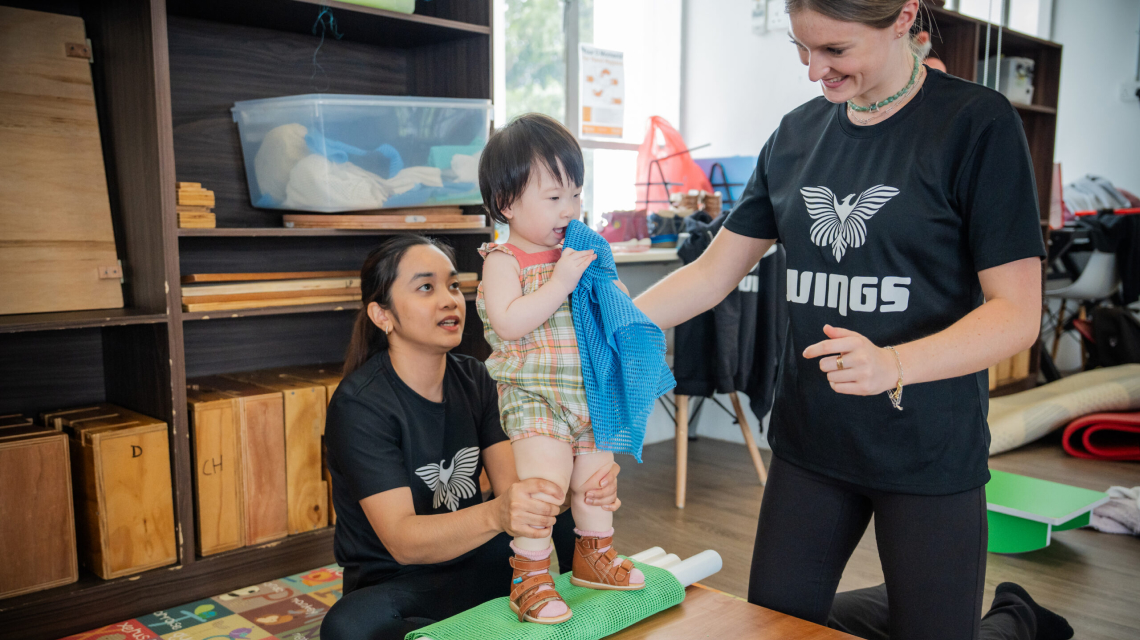
In each session, the child in carefully selected positions and guides them through specific movement sequences. The child is encouraged to complete the movement actively, with exercises personalised to their current abilities. This can be done with or without supportive equipment, making DMI suitable across different mobility levels.
How Does DMI Work?
Stimulates The Brain Through Movement
DMI uses purposeful, repeated movement to encourage neuroplasticity, which is the brain’s ability to form new neural connections. By triggering targeted motor patterns in dynamic positions against gravity, then gradually increasing complexity, DMI practitioners support motor learning and the development of new skills over time.
Encourages Active Participation
In DMI sessions, children are guided to respond actively instead of being moved passively. Each exercise is set up like a small challenge, inviting the child to problem-solve, adjust and complete the movement themselves. This active involvement builds confidence, motivation and a stronger sense of independence.
Builds Strength, Balance and Coordination
DMI exercises target core strength, posture and alignment, all essential foundations for movement. With consistent practice, children may develop better trunk and head control, steadier sitting or standing balance and smoother transitions between positions. These physical gains support more independent movement in daily life.
Key Benefits Of Dynamic Movement Intervention
Parents often notice gradual but meaningful gains, such as:
- Improved gross motor function and body control
- Improved brain-body connections that help your child learn movement skills more easily
- Greater independence in sitting, standing, walking and daily play
- Increased confidence to explore new movements
Progress looks different for every child. For some, it can be the first time holding their head up independently while for others, it may be walking across a room unaided. Even small steps forward can unlock bigger changes in daily life and family routines.
What Happens During A DMI Session?
A DMI session typically begins with a quick assessment of how your child is moving and feeling that day. After a gentle warm-up, the practitioner will guide your child through a set of movement-based exercises. Sessions are dynamic and interactive, often using toys, songs or play to keep children motivated.
Practitioners modify each activity based on your child’s tolerance and progress, keeping the experience safe yet challenging. Parents are welcome to observe, so you can learn how to support similar movements at home.
How DMI Fits Into The Intensive Model Of Therapy (IMOT)
At WINGS, DMI can be delivered within an Intensive Model of Therapy.
This format typically involves one to four hours of therapy per day, five days a week, over four to six weeks.
The high frequency reinforces movement patterns more consistently, which may accelerate progress compared to traditional once or biweekly sessions that other more conventional methods might operate by.
Who Can Benefit From DMI?
DMI may be helpful for children with a range of motor delays and neurological conditions, including but not limited to:
- Down Syndrome
- Cerebral palsy
- Global developmental delay
- Hypotonia
- Chromosomal or genetic disorders
- Spinal cord lesions
- Acquired brain injuries
Sessions are adaptable for infants facing developmental delays as well as older children refining balance, posture and coordinated movement.
Real Stories Of Progress At WINGS
We’ve seen children come in needing full support to stand, then finish an intensive block taking their very first steps on their own.
One child, J, who was diagnosed with Spinal Muscular Atrophy Type II, worked through consistent DMI intensives over a span of about 4 years with us, and surprised everyone by taking 15 confident steps on his own!
This was a milestone his parents once feared may never come.
Another child began with assisted standing and through steady practice and encouragement, progressed to independent standing and stepping.
These journeys remind us that progress is not about speed; it’s about possibility.
We document our success stories on our social media and under “Success Stories” on our website, so please do check them out!
Help Your Child Thrive With WINGS

DMI has the potential to help children build meaningful progress in mobility, coordination and confidence.
No matter how profound your child’s challenges may seem right now, there is hope, and we’re here to walk beside you every step of the way.
Reach out to us to learn more about how we can help your special little one.