

What is Dynamic Movement Intervention (DMI)?
Dynamic Movement Intervention (DMI) is a movement-based intervention approach designed to support children with gross motor and developmental challenges through guided movement activities.
The approach is built around the understanding that children learn and develop through movement and active participation.
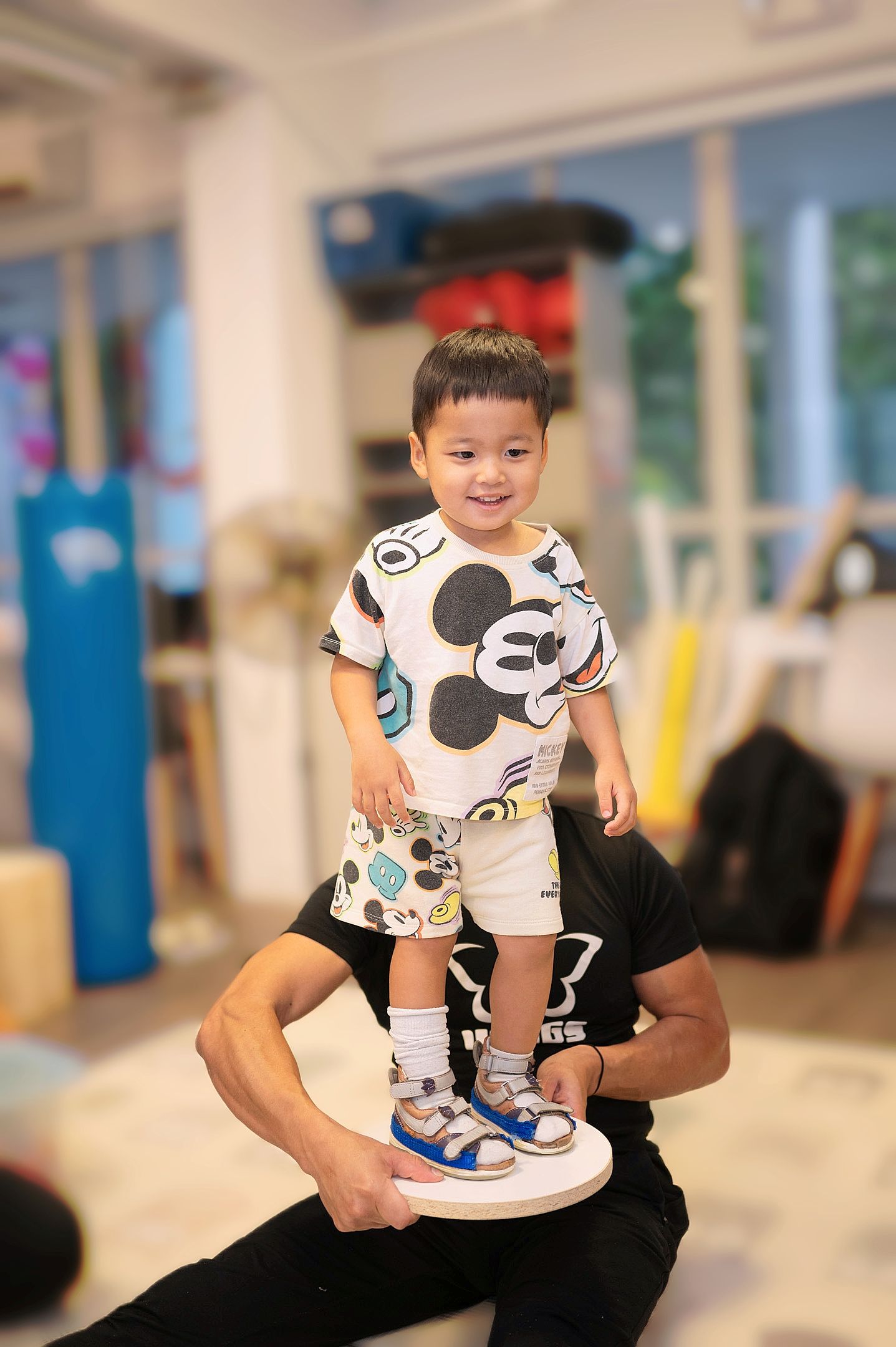
DMI sessions focus on encouraging postural control, balance, coordination, and functional movement skills through structured exercises and dynamic movement experiences.
DMI incorporates principles of motor learning and neuroplasticity to encourage active movement responses and developmental progression over time.
At WINGS, DMI-informed activities are incorporated into individualized developmental and rehabilitation programmes based on each child’s unique needs and goals.
How Does DMI Work?
After an initial consultation (where we thoroughly assess your child’s movement patterns & identify areas of concern) is conducted by our Director of Rehabilitation, he will curate an individualised programme alongside your DMI practitioner based on your child’s unique needs. DMI is the signature discipline in our intensive early intervention programme.
Key DMI Elements to Know
Dynamic Movement Intervention is suitable for infants 4 months and up. It is designed for children with developmental motor delays.
- Age group: Infants 4 months and up
- Postural alignment: Guided exercises that support better postural control for independent walking, sitting and standing
- Guided movements: These stimulate the nervous system, resulting in the activation of targeted muscle groups
- Dynamic positioning: Children are often placed in dynamic positions that demand active engagement and adjustment. This supports muscle strengthening, coordination and balance.
- Repetition: Constant reinforcement trains a child’s brain to form new neural connections for improved motor skills
Who Is DMI For?
DMI benefits infants, toddlers and small children with a wide range of developmental, neurological, genetic, and motor challenges.
At WINGS, we work with children across a diverse spectrum of presentations — from mild developmental delays to complex neurological and rare genetic conditions.
Your child could be a good candidate if they are experiencing:
- Delayed motor milestones
- Low muscle tone (hypotonia)
- Balance and coordination difficulties
- Weakness or reduced postural control
- Neurological or neuromuscular conditions
- Genetic or chromosomal disorders
- Brain or spinal cord injuries
- Movement difficulties affecting mobility and independence
What to Expect During a DMI Session
- 1-on-1 sessions
- Each DMI session typically averages 40-60 minutes
- Repetitive exercises are conducted to correct muscle activation patterns for improved motor function
An initial consultation evaluation helps our team determine your child’s physical limitations, needs and capabilities. This information-gathering process allows them to craft an effective intervention plan.
While DMI practitioners offer services that may help to improve muscle strength, balance and safe mobility, other therapy modes may be introduced to address any other issues your child might have to ensure a comprehensive approach to your child’s unique condition.
DMI Practitioners in Singapore
At WINGS, our DMI sessions are delivered by practitioners who have undergone formal DMI training and certification to support each child’s growth, independence, and freedom of movement.
All our registered and trained DMI practitioners are listed on the DMI official website.
Certified DMI Practitioners and Training Courses in Singapore
DMI therapy courses have 6 levels in total. All levels must be completed in order, starting from Introductory Level A.
DMI Levels in Sequence
- Introductory Level A
- Introductory Level B
- Introductory Level C
- Intermediate Level A
- Intermediate Level B
- Master/Teachers Levels
- Those looking for DMI training in Singapore will be pleased to know that all Introductory Level courses are available virtually
- However, Intermediate Level A and B courses, as well as certifications for Master/Teachers Levels are only offered in-person
- Each course consist of teaching hours and a practical portion
- Each course is either 10 to 15 hours long depending on the number of participants involved
- Potential candidates must have a formal university education Physiotherapy or Occupational Therapy as a pre-requisite to undergo formal training.
Telehealth and Parent Guidance Options
WINGS offers online consultations for when life gets hectic, so you can evaluate your child’s suitability for DMI before committing.
While we do not yet offer any remote DMI services, we do provide take-home exercise routines that we will teach your child’s caregivers after they complete their intensive to preserve your child’s newfound skills and prepare them for the next stage in their intervention plan we’ll work on in their following intensive.

Frequently Asked Questions About DMI Therapy
Is DMI available in Singapore?
Yes, DMI is beginning to build awareness in our region. However, WINGS remains the oldest centre to introduce the programme to the region, and the first to provide DMI. This has allowed us to have one of the most diverse caseloads, seeing kids ranging from high functioning and mild conditions to highly complex and profound conditions (including rare genetic disorders and severe injuries), from across the globe.
Who are the certified DMI practitioners in Singapore?
Certified DMI practitioners are those that are listed on the official Registered DMI Practitioners list. At WINGS, we’re proud to have our own practitioners that are passionate about their work in helping children reach their developmental milestones.
Is DMI covered by insurance or subsidies?
While DMI specifically is not currently covered by insurance providers, we do have our own private subsidies.
As a social enterprise under raiSE, we provide subsidies based on means-testing individual applicant family incomes, to cut the cost of our services for underprivileged families in our WINGS For Good initiative.
We are also a Baby-Bonus approved vendor so you can use your ECDA funds with us.
Lastly, we are partnered with Atome and GrabPay for installment payment.
How many DMI sessions does my child need for results?
Results vary per child, however, we have observed that the younger the child is, the faster and more flexible their progress is, which is why we highly recommend an early intervention approach. That being said, we do also see adolescents and youths who show incredible progress and are even able to achieve independence even in their teens and 20s! It really depends on the individual.
From what we’ve observed at our clinic, DMI specifically is usually best applied for smaller sized individuals.
Start Your DMI Journey
Let us work together to help your child reach new development milestones and experience greater independence. Book a consultation with us today.