
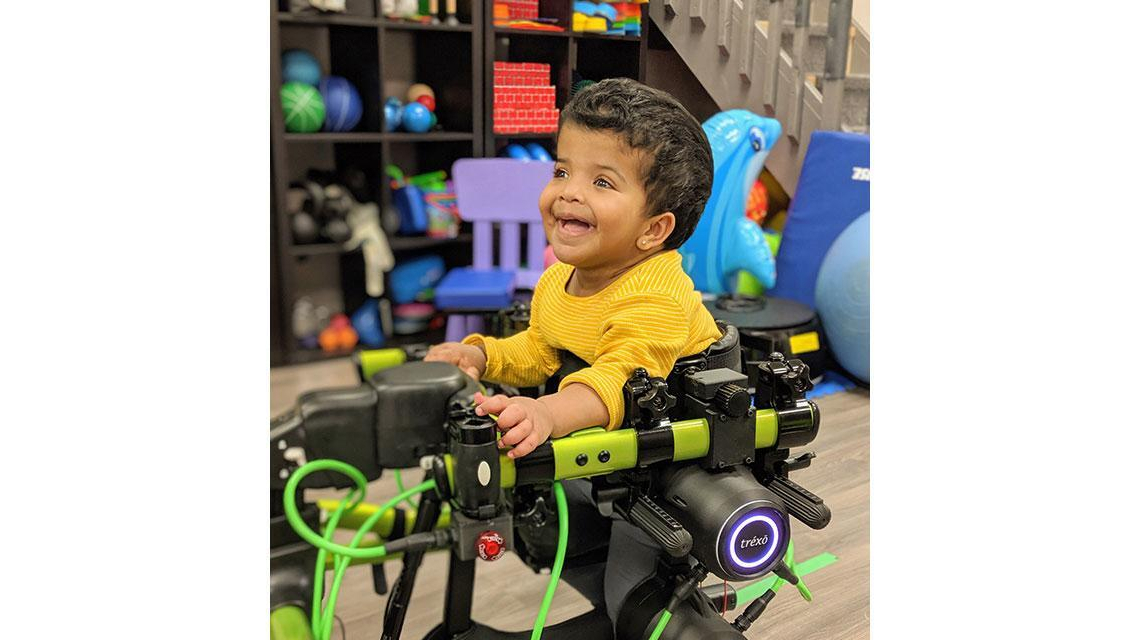
When parents begin exploring support options to encourage their child’s walking, robotic gait training often appears as a highly visible and impressive-sounding option. With sleek equipment, guided stepping patterns and an aura of advanced technology, it can seem like a promising shortcut towards mobility support.
At WINGS Therapy & Learning Center, we take a more considered approach. Movement, not technology, is our starting point.
Robotic gait training can be a useful tool in the right context, but it is not appropriate for every child, nor should it replace active movement learning during critical developmental windows. This article explores what robotic gait training does, when it may be helpful, and why active, self-generated movement remains central to walking development.
What is Robotic Gait Training?
Robotic-assisted gait training is a technology-supported approach that provides guided, repetitive stepping practice. Using mechanical or robotic systems, a child is positioned upright while the equipment assists aspects of posture, alignment and leg movement.
These systems may offer:
- Consistent movement guidance
- Repetitive stepping practice in a structured environment
- External support for posture and alignment
Research literature describes how repetitive, guided movement may support gait exposure and alignment under specific conditions. However, it is important to understand that while robotic systems may help guide movement, they do not create strength, balance or motor control on their own.
Those skills still need to be developed through active participation, effort and sensory feedback.
Why Independent Movement Matters More Than Assisted Walking
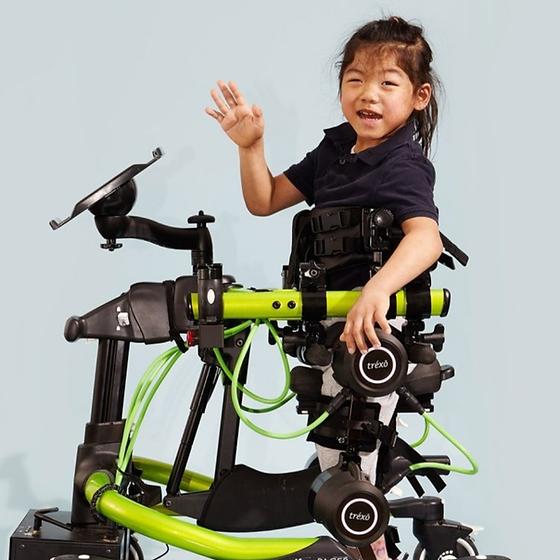
Walking is not simply a stepping pattern. It is a complex skill that involves:
- Active muscle engagement
- Balance reactions
- Weight shifting
- Postural control
- Continuous sensory feedback
The body and brain learn these skills most effectively through self-initiated, effortful movement, rather than passive support.
During early development, especially, children benefit from opportunities to:
- Try, adjust and explore movement
- Activate muscles repeatedly
- Experience gravity and balance challenges
When equipment takes over too much of the work, it may:
- Reduce opportunities for muscle activation
- Limit postural responses
- Influence confidence and motor planning over time
In simple terms: repetition matters, but who is doing the work matters more.
When to Use Caution With Robotic Gait Training
Robotic gait training can sound exciting and revolutionary, but it is important not to be swayed by such claims and focus on your child instead. While it can play a role in certain early childhood intervention programmes, it is not universally suitable for every child or every stage of development.
Understanding when to proceed carefully helps families make more informed decisions and ensures that technology supports active movement learning.
Age and Neuroplasticity
Early childhood is widely recognised as a period of heightened neuroplasticity, when the brain is particularly responsive to experience. During this stage:
- Children with strong movement potential benefit most from active, self-generated movement
- Over-reliance on equipment may reduce opportunities for genuine motor learning
For babies and young children, walking skills are often best supported through:
- Ground-based play
- Progressive strength development
- Balance and postural challenges
- Exploration against gravity
Functional Movement vs Machine-Led Movement
Strength, balance, coordination and endurance develop through:
- Repeated active practice
- Gradual increases in challenge
- Time spent working against gravity
While robotic gait training may provide stepping exposure, it should not replace:
- Floor mobility
- Transitional movements
- Standing balance practice
- Overground walking attempts
Walking development typically involves a very high number of active movement repetitions over time guided by qualified pediatric physiotherapists, not occasional assisted sessions.
When Robotic Gait Training Can Be Helpful
At WINGS, we are not anti-technology. We are intentional about how and when it is used.
Robotic gait training is considered within the context of a child’s overall movement development and only introduced when it supports broader learning goals. Historically, technology-assisted gait systems were first explored in discussions of cerebral palsy treatment, which led to their greater visibility in paediatric care today.
Guided by experience in Singapore with structured support frameworks, technology-assisted tools are integrated selectively and thoughtfully. Sessions remain goal-focused, carefully guided by trained practitioners, and adapted over time in response to each child’s abilities, engagement and progress. In these contexts, robotics can be used to introduce gait experiences, not to replace active movement learning.
How WINGS Integrates Robotics Within the Intensive Therapy Model
At WINGS Therapy & Learning Center, robotic tools are used selectively within the broader intensive therapy model for children. They are never the centrepiece.
Our intensive therapy programme for children focuses on:
- Independent movement generation
- Active strength and balance development
- High-frequency, child-driven repetition
- Structured intensity delivered over defined periods
Robotic gait training, when included, supports these broader goals rather than directing the process.
This is how intensive therapy programmes for children are structured at WINGS, with movement as the foundation and technology used thoughtfully to complement, not replace, active learning.
A Thoughtful Approach Makes the Difference
Robotic gait training can be helpful — when used at the right time, for the right reasons, and with the right expectations.
For children developing walking skills, active movement learning remains essential. Strength, balance, coordination and confidence grow through effort, exploration and repetition, not shortcuts.
At WINGS Therapy & Learning Center, every tool is chosen with care, guided by one principle: Movement remains the foundation of how support programmes are designed.