

If your child communicates, plays or responds differently from other children their age, you may wonder whether they could be autistic. Autism looks different from one child to another. No single behaviour can tell you whether your child is autistic, but concerns about their development are worth discussing with a doctor.
At What Age Can Signs of Autism Appear?
Signs of autism may be noticeable in the first or second year of life, although some become clearer later. Some children develop new skills more slowly; others lose words or social skills they previously used. If your child loses a skill, speak to their doctor promptly.
Can Autism Be Detected At Birth?
No. There is no newborn behaviour that can reliably tell parents their baby is autistic. Signs may emerge during the first year or later as communication and social skills develop. If you notice a pattern that concerns you—or your child loses skills they previously had—speak to your child’s doctor rather than waiting for a particular age.
What Early Signs Might Parents Notice?
You may notice differences in how your child communicates, plays or responds to everyday situations. Possible early signs can include:
- Rarely pointing to show you something interesting
- Using few gestures
- Finding back-and-forth play difficult
- Developing speech later than expected
- Repeating words or phrases
- Repeated movements or play patterns
- A strong preference for routines
- Focused interests
- Intense responses to sounds, lights or textures
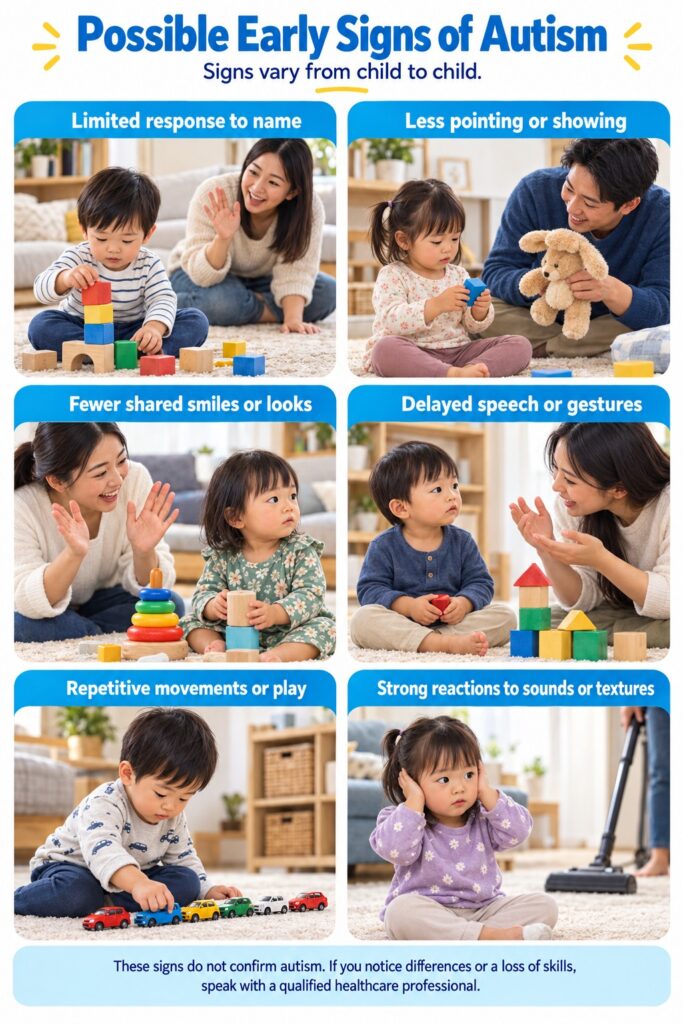
Children do not need to show every sign, and these behaviours can have other explanations.
Does a Speech Delay Always Mean Autism?
No. A speech delay alone does not mean a child is autistic. A professional will consider your child’s communication, play, social interaction and overall development rather than relying on one sign. Likewise, a child who speaks or makes eye contact can still be autistic.
Can an Autistic Child Meet Their Gross Motor Milestones?
Yes. Many autistic children sit, crawl and walk on time. Others may also have movement or coordination difficulties that deserve attention in their own right. Walking on time neither confirms nor rules out autism.
What Should I Do If I’m Concerned?
Write down what you have noticed, when it began and any examples from home or preschool. Then speak to your child’s polyclinic doctor, GP or paediatrician. They can advise whether a referral for a developmental or autism assessment is appropriate. You do not need to wait until your child shows every sign before asking. Depending on your child’s needs, the next step may involve monitoring, further developmental assessment or early childhood intervention.
While you seek advice, keep connecting with your child through activities they enjoy. Clear language, predictable routines and adjustments for sensory discomfort may make everyday life easier.
How Can WINGS Help?
If your child also has difficulties with movement, balance, coordination, posture, daily activities or participating in physical activities, WINGS can assess their movement abilities and discuss suitable movement-based programmes based on their needs and goals. These may include Suit Therapy, Autism Fitness, Adaptive Ballsports and Activities of Daily Living programmes, where appropriate. Where movement or physical function requires clinical support, paediatric physiotherapy may also be considered following an appropriate assessment.
Contact WINGS on WhatsApp to book an assessment if you would like to discuss your child’s movement and functional needs. A WINGS assessment does not diagnose autism. For concerns about an autism diagnosis, speak with your child’s doctor.