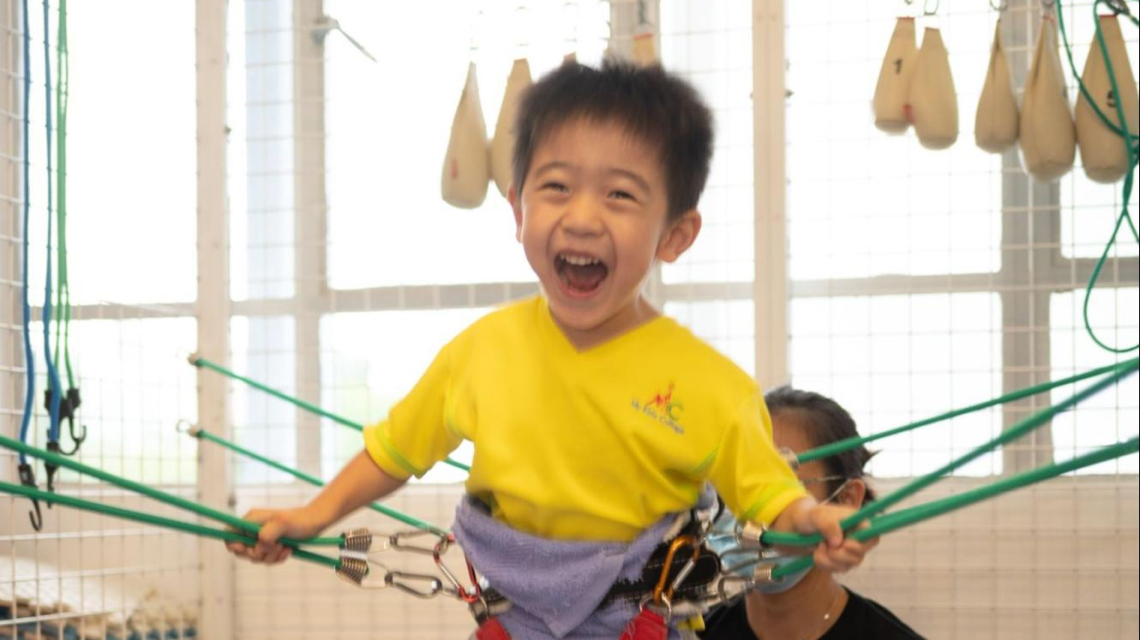
Cerebral palsy affects movement and posture differently in every child. A baby may be working on head control or sitting, while an older child may be practising standing, walking or moving during play. At WINGS, support begins with the child’s current abilities and the family’s goals.
What Is Cerebral Palsy and Why Is Physical Therapy Needed?
Children with cerebral palsy may experience different challenges with movement because the condition disrupts their ability to send and receive signals to the muscles. Paediatric physiotherapy aims to improve motor skills like balance, strength, and coordination with exercises, muscle relaxation techniques and specialised equipment. The ultimate goal of physical therapy is to improve independence, manage pain, prevent secondary complications like painful muscle tightening, and enhance overall quality of life.
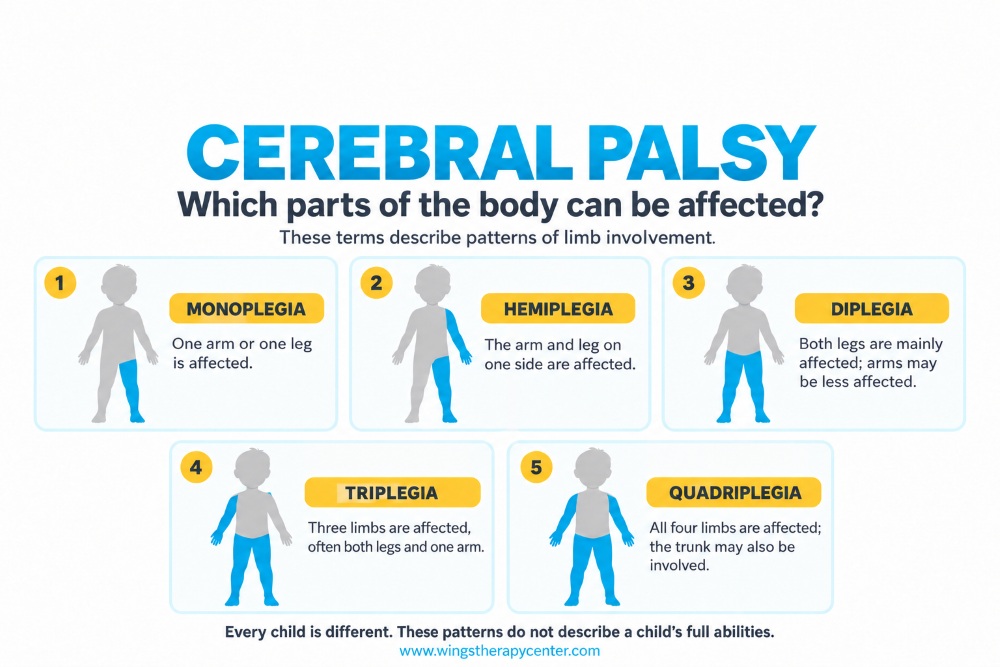
There are five main types of cerebral palsy, with spastic cerebral palsy being the most commonly diagnosed type of cerebral palsy.
- Spastic cerebral palsy: Also referred to as hypertonic cerebral palsy, this is the most common type of cerebral palsy. Symptoms include tight muscles and joints, as well as difficulty crawling or walking.
- Athetoid cerebral palsy: Also known as dyskinetic cerebral palsy, this may involve involuntary muscle movements that can affect posture, movement and everyday activities such as feeding.
- Ataxic cerebral palsy: Children with ataxic cerebral palsy may be prone to involuntary movement, tremors and encounter speech difficulties.
- Hypotonic cerebral palsy: Characterised by low muscle tone, children with hypotonic cerebral palsy may have difficulty with head control, posture or balance.
Baby Developmental Milestones by Month
Challenges that children with cerebral palsy commonly face may result in delayed motor milestones. More than just improving movement, physical therapy for cerebral palsy also seeks to help children gain confidence, boost social participation, and support emotional development.
How can therapy help a child with cerebral palsy?
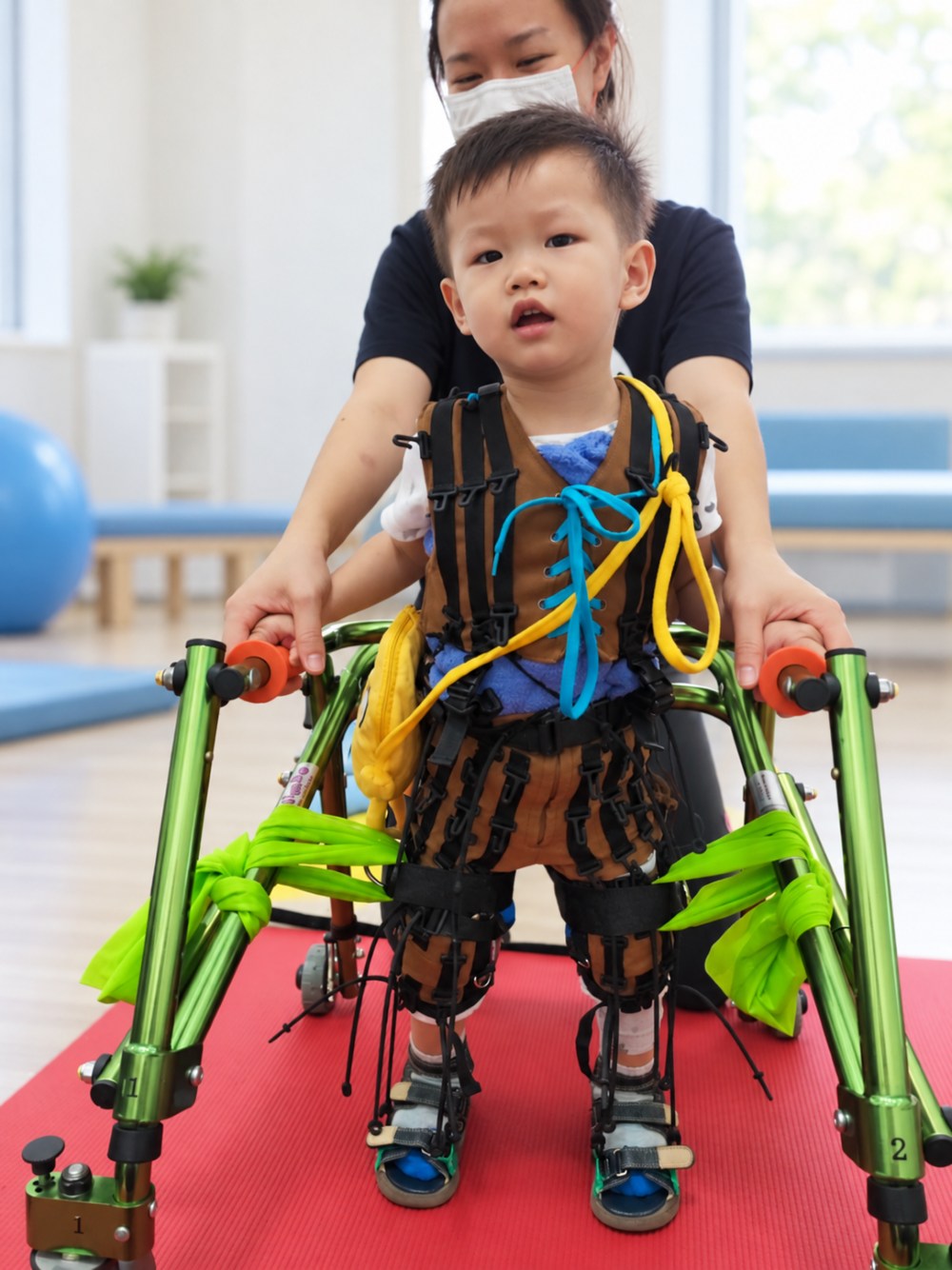
Therapy can help a child practise movement skills used in everyday life. An AHPC-registered physiotherapist may assess physical difficulties and plan physiotherapy around individual goals. These might include changing positions, sitting with greater control, standing with support or walking.
Walking is not the only meaningful goal. Reaching for a toy, joining in play or making a daily transfer easier may also matter to a family.
What is an Intensive Therapy Programme?
An intensive therapy programme provides frequent, structured opportunities to practise movement over a planned period. Activities are selected according to the child’s abilities, medical history, tolerance and goals. WINGS’ movement-based developmental programmes may focus on head and trunk control, reaching, balance or transitions between positions.
What is Dynamic Movement Intervention (DMI)?
DMI therapy is a structured approach to practising gross motor skills through guided, active movement. A trained practitioner supports the child in selected positions and guides repeated activities that encourage the child to participate—for example, adjusting their body to maintain balance or working towards a change in position.
The activities and level of support are adapted to the child’s current abilities and goals. DMI may be included in a WINGS programme where suitable; it does not guarantee a particular milestone.
What Other Approaches May be Included?
No child needs every intervention. Following an assessment, a WINGS programme may also incorporate:
- Suit Therapy with NeuroSuit® or TheraSuit®: selected movement activities performed while wearing a specialised suit.
- Spider Cage Therapy: supported practice of positions and movements using a Universal Exercise Unit.
- Electrical Stimulation: considered for specific goals when appropriate for the child.
- Vibration Therapy with Galileo®: a supporting intervention that may be considered alongside other activities.
The team should explain why an approach is recommended, what the child will do and how progress will be reviewed. These interventions do not cure cerebral palsy.
What Happens at a WINGS Assessment?
A WINGS assessment takes approximately 45 minutes. We review your child’s medical and developmental history, conduct a physical assessment and discuss their movement, functional skills and your priorities. Afterwards, we share our observations and, where suitable, recommend a programme and individual goals.
Physiotherapy services at WINGS are provided by an AHPC-registered physiotherapist. To discuss your child’s needs and book an assessment, contact WINGS Therapy Center in Singapore on WhatsApp.