
If your child is working hard to sit upright, crawl, balance, stand or walk, you may be looking for ways to help them practise. Suit therapy is a movement-based intervention offered at WINGS to children over two years old. A fitted therapeutic suit provides adjustable support during activities planned around your child’s abilities and developmental goals. Sessions typically last 90–120 minutes.
What Is a Therapeutic Suit?
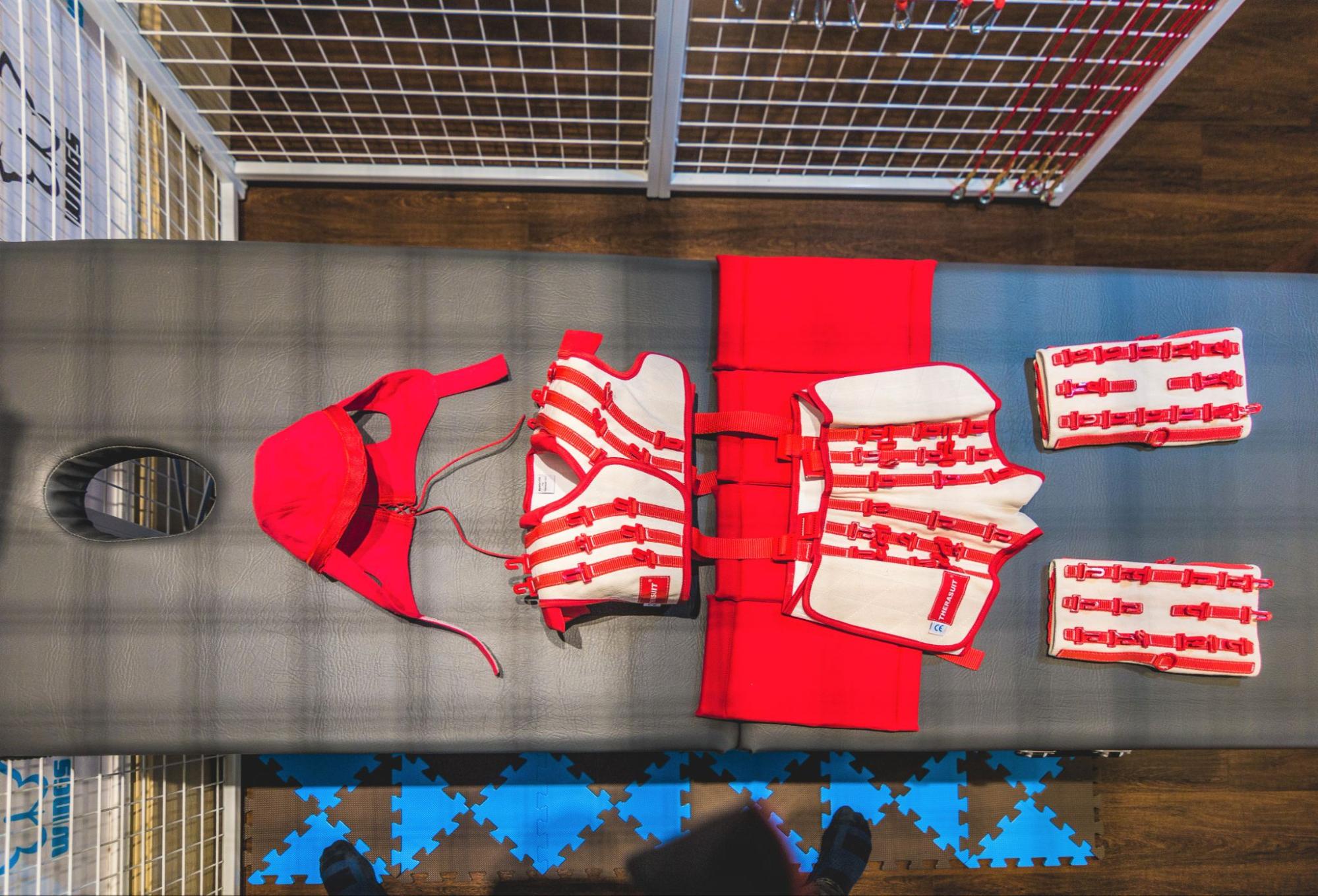
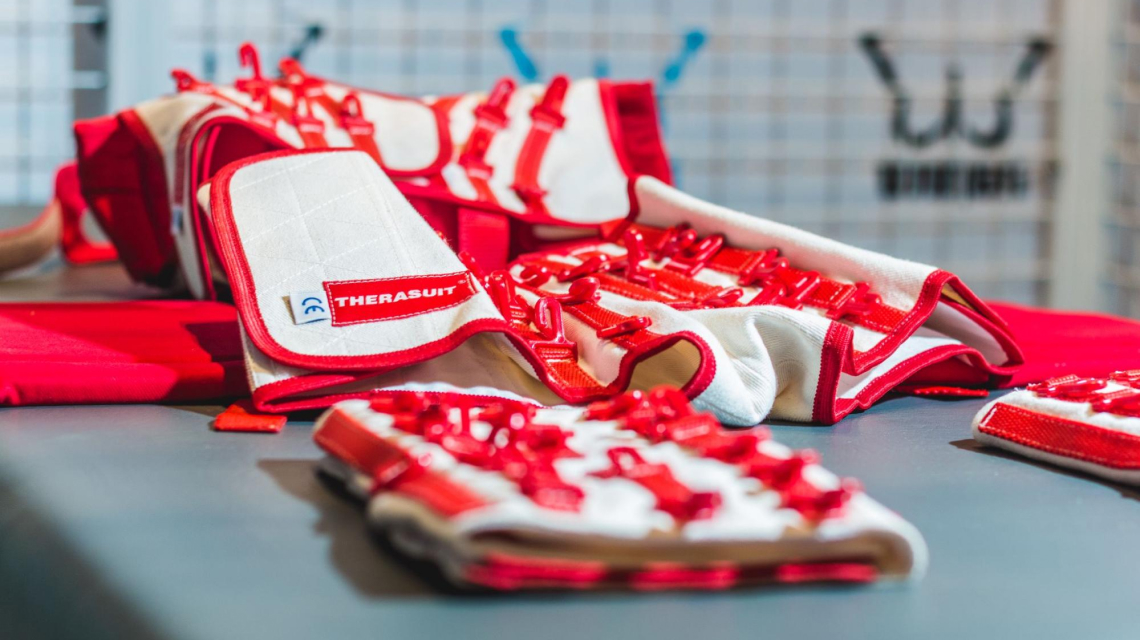
NeuroSuit™ and TheraSuit® are two suit systems. A suit typically includes a vest, shorts, knee supports and attachments around the feet or footwear, connected by adjustable elastic cords.
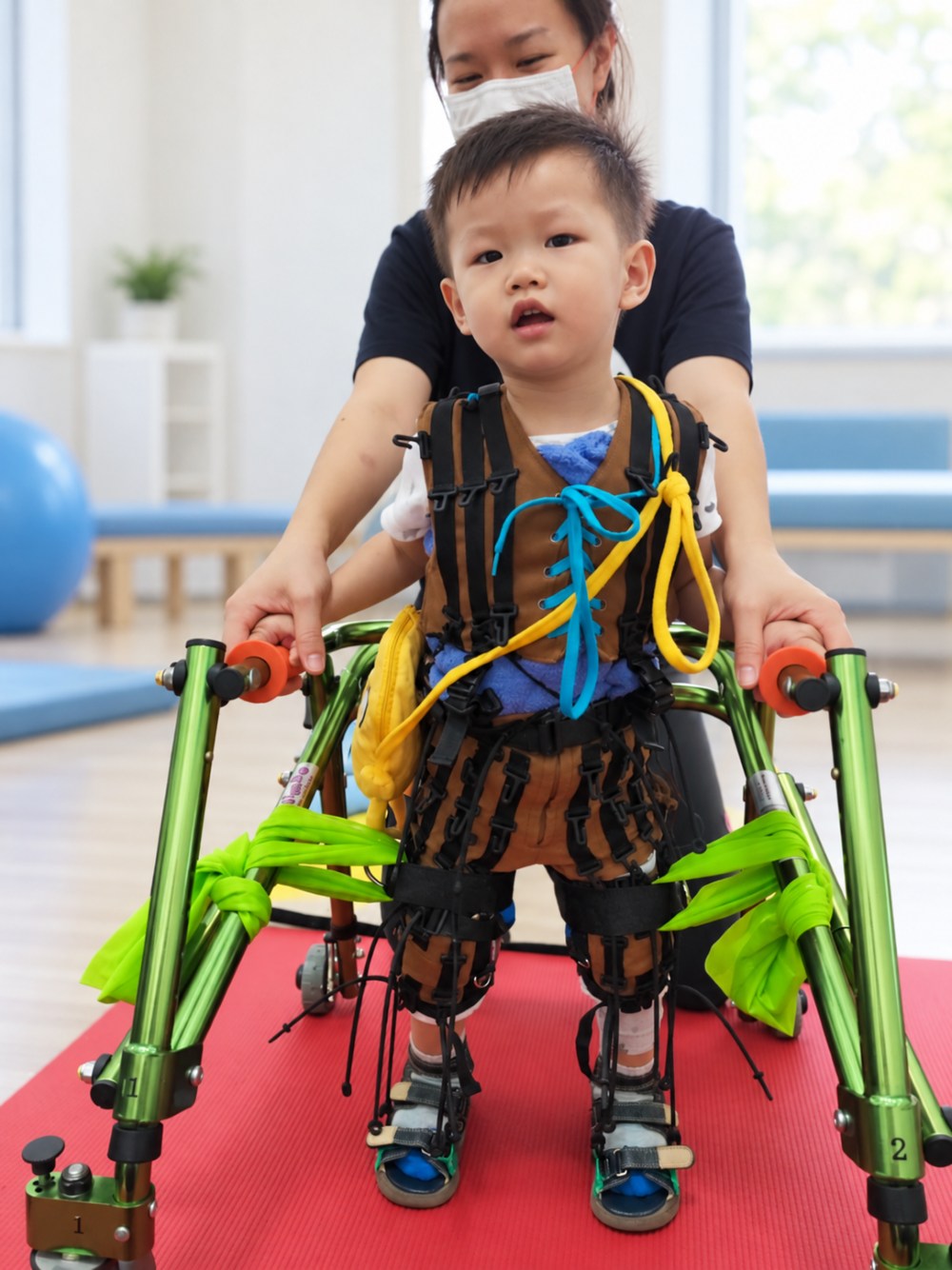
Think of it as soft, flexible external support. A trained practitioner adjusts the cords to help position your child’s body and provide support or gentle resistance. The suit does not move for your child; your child takes an active part in each activity.
Where Did Suit Therapy Come From?
Suit therapy has roots in Russia’s space programme of the late 1960s and early 1970s. Time in weightlessness could leave astronauts with weaker muscles and balance difficulties when they returned to Earth. Researchers developed a suit that provided resistance during movement. In 1991, the design was adapted into the Adeli suit for children with cerebral palsy. Other therapeutic suit systems followed, including TheraSuit® and NeuroSuit™.
How Can Suit Therapy Help Your Child?
For children with neuromuscular disorders, physical disabilities or postural difficulties, including cerebral palsy, controlling their body can take considerable effort. Crawling, reaching for a toy, sitting steadily, standing and taking steps may all be challenging.
For families exploring cerebral palsy therapy in Singapore, Suit Therapy may be considered as one movement-based approach depending on the child’s abilities, goals and assessment.
A therapeutic suit provides adjustable support as your child practises these movements. Its cords can help guide posture and provide proprioceptive feedback—information that helps your child sense where their body is as they move. Through guided, repeated practice, your child can work towards milestones and greater independence: sitting upright to use their hands, shifting their weight, standing up and taking supported steps. Sessions aim to build body awareness, strength, balance and coordination, with support adjusted as your child progresses.
What Happens Before and During Suit Therapy Sessions?
We review your child’s medical history, diagnosis, movement abilities, comfort and goals before fitting the suit. Activities may include sitting, standing, balance practice, supported walking or an appropriate sports activity.
A 90–120-minute session includes fitting, guided practice and rest breaks as needed. We monitor your child’s comfort throughout. Suit therapy may also form part of a WINGS Intensive Model of Therapy (IMOT) programme alongside other movement-based interventions.
Is Suit Therapy Suitable for Every Child?
Some children need further medical review or a modified programme. Examples include significant hip displacement, severe scoliosis, fixed joint contractures, fragile bones or uncontrolled seizures. Suitability and progress vary from child to child.
Could suit therapy help your child work towards their next milestone? Contact WINGS on WhatsApp to book an assessment. We’ll discuss your child’s needs and whether a suit-based programme is suitable.