- Home
- DMI
Dynamic Movement Intervention In Singapore

Dynamic Movement Intervention (DMI) therapy in Singapore uses guided movement patterns to improve mobility and gross motor skills of young children (4 months and above) with physical disabilities and movement disorders.
Dynamic movement therapy's goal is to help train a child to develop balance against gravity, to prepare them for sitting, standing and walking independently.


What is Dynamic Movement Intervention (DMI)?
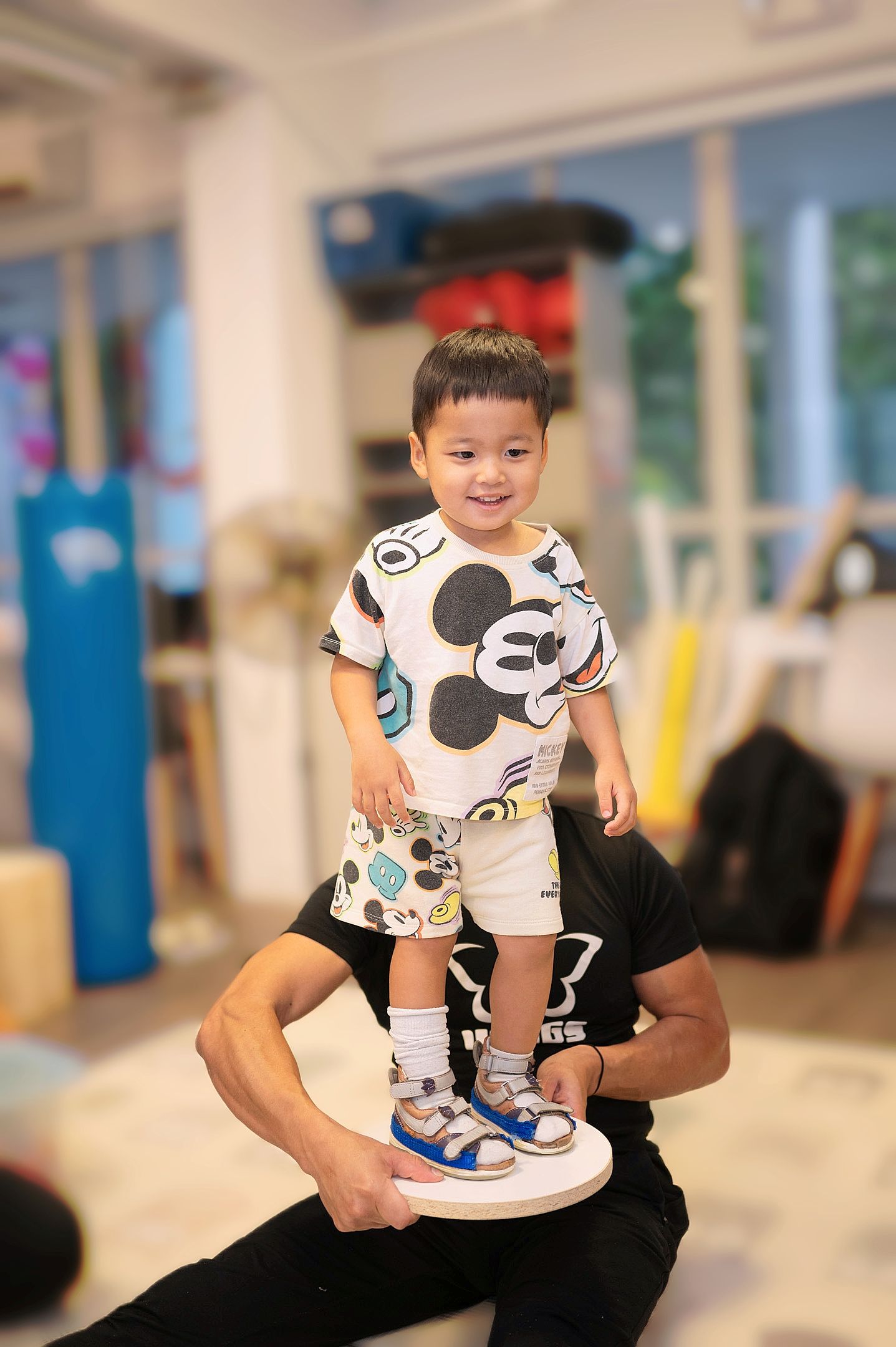
Dynamic Movement Intervention (DMI) is a structured paediatric physiotherapy approach for children with gross motor delays and physical disabilities. It builds on the understanding that children learn and develop through moving their bodies by addressing their motor skills with guided exercises. This approach incorporates the principles of neuroplasticity to train the child’s brain via dynamic movements against gravity. DMI therapy aims to promote active motor responses by encouraging children to complete a movement pattern. Over time, these learned responses become more natural, resulting in optimal gross motor abilities.
How DMI Therapy Works
Our DMI therapists will conduct a thorough assessment of your child’s movement patterns to identify areas of concern. They will then draft a care plan with dynamic intervention exercises aimed at strengthening your child’s neurological system, which may help them develop desired movements and address any postural challenges. Younger children between the ages of 0-3 may benefit from our personalised and intensive early intervention programme.
Key DMI Elements to Know
Dynamic Movement Intervention is suitable for infants 4 months and up. It is designed for children with developmental motor delays.
- Age group: infants 4 months and up, until independent movement is achieved
- Postural alignment: Guided exercises that support better postural control for independent walking, sitting and standing
- Guided movements: These stimulate the nervous system, resulting in the activation of targeted muscle groups
- Dynamic positioning: DMI therapists place children in dynamic positions that demand active engagement and adjustment. This may possibly support muscle strength, coordination and balance.
- Repetition: Constant reinforcement trains a child’s brain to form new neural connections for improved motor skills
Who is DMI Therapy for?
Children diagnosed with the following types of conditions may benefit from DMI therapy:
- Down syndrome
- Cerebral palsy
- Global developmental delay
- Hypotonia
- Chromosomal abnormalities or genetic disorders
- Spinal cord lesions
- Acquired brain injury
What to Expect During a DMI Session
A combination of paediatric physical therapy and occupational therapy principles may be recommended for optimal results. Here’s what you can expect from a DMI session:
- 1-on-1 DMI therapist-child sessions
- Each DMI therapy session typically averages 40-60 minutes
- Intensive programmes (also known as intensives) last from 1 to 4 hours a day
- Repetitive exercises are conducted to correct muscle activation patterns for improved motor function
A paediatric physical therapy evaluation helps our therapists determine your child’s physical limitations, needs and capabilities. This information-gathering process allows them to craft an effective intervention plan. While DMI physical therapists offer services that may help to improve muscle strength, balance and safe mobility, occupational therapy may help address fine motor skills and support visual-motor integration crucial for everyday tasks.
Occupational therapy may look a lot like play-based therapy, with personalised interventions designed to support difficulties with sensory integration, or fine motor movements. DMI therapy, meanwhile, may involve crawling, walking or jumping. Your child’s DMI therapist will observe them and provide guidance which improves safe mobility, possibly optimising physical function and independence.
Personalised Care for Every Child
During the initial assessment phase, areas of deficit are identified, to determine areas of concern where dynamic intervention may make a difference. This can include issues with posture and alignment, balance and coordination, hyptonia (poor muscle tone) or a limited range of motion. Age-appropriate motor milestones that have not yet been reached will also be taken into consideration.
No care plan is complete without setting goals. Based on your child’s age, areas of concern and their natural abilities, our DMI therapists will set targets so we can work together towards improving your child’s development and wellbeing.
From Neurosuit Therapy that may improve a child’s proprioception (their sense of their body’s position, movement and force), to adaptive sports programmes catered to the unique needs of each child, your child will receive personalised care at our DMI therapy centre.
We conduct regular reviews to track each child’s progress at our DMI therapy centre. Milestones such as independent standing, their first unassisted steps and the ability to go from sitting to stand with minimal support are huge. Every little step forward represents getting a little closer to independent and safe movement, which we are happy to assist your child with.
DMI Therapy Practitioners in Singapore
At WINGS Therapy and Learning Centre, we provide Dynamic Movement Intervention (DMI) therapy delivered by practitioners who have undergone formal DMI training and certification to support each child’s growth, independence, and freedom of movement. All our registered and trained DMI practitioners have previous experience working in paediatric care. Official Dynamic Movement Intervention certification guidelines welcomes practitioners with backgrounds in physical or occupational therapy to register for DMI therapy courses.
Why Choose Wings Therapy Center for DMI Therapy in Singapore
- DMI-certified and trained therapists: Our accredited practitioners are well-versed in dexterity, head and trunk, trunk and standing as well as standing and walking exercises.
- Multidisciplinary team: From paediatric physical therapists, paediatric occupational therapists, to speech therapists, our results-oriented care team is here to help your child achieve greater independence and wellbeing.
- A different approach to physiotherapy centre for kids: WINGS specialises in goal-setting and customised programmes. This approach has resulted in WINGS being the first place on the island to offer suit and Dynamic Movement Intervention therapy.
- Modern facilities: From NeuroSuits that provide both support and resistance, to Robotic-Assisted Gait Training (RAGT) that simulate the experience of independent walking, WINGS has plenty of space and activities designed for helping kids of all abilities possibly achieve greater motor control.
- Asia’s first and only Intensive Model of Therapy Centre: From 1-4 hours a day, 5 days a week for 3-4 weeks, our intensives represent a holistic approach to addressing gross motor, fine motor and social awareness skills.
Success Stories and Outcomes

How to Register Your Child for DMI Therapy in Singapore
If you are looking for information on where to register your child for early intervention sessions in Singapore or how to navigate the public system, here is a guide:
Direct Admission with WINGS
Contact Us: Book a consultation with us.
Comprehensive Assessment: Our physiotherapists conduct a thorough assessment.
Personalised Programme: We develop a personalised therapy care plan and set a start date, often with minimal wait time.
Financial Support & Accessibility
ECDA-Registered & Baby Bonus Approved: Our status as an approved ECDA vendor allows families to utilise the Baby Bonus scheme. You can use funds from your Child Development Account (CDA) to offset therapy costs directly.
WINGS For Good – Subsidised Therapy: As a member of raiSE, we run the WINGS For Good initiative. This social impact programme provides subsidised therapy rates for eligible low-income families who require additional financial support.
Flexible Instalment Payments: We offer flexible payment options and instalment plans via GrabPay and Atome. We are currently in the process of integrating Yuu points redemption for added value.
Certified DMI Practitioners and Training Courses in Singapore
DMI therapy courses have 6 levels in total. All levels must be completed in order, starting from Introductory Level A.
DMI Levels in Sequence
- Introductory Level A
- Introductory Level B
- Introductory Level C
- Intermediate Level A
- Intermediate Level B
- Master/Teachers Levels
- Those looking for DMI training in Singapore will be pleased to know that all Introductory Level courses are available virtually
- However, Intermediate Level A and B courses, as well as certifications for Master/Teachers Levels are only offered in-person
- Each course consist of teaching hours and a practical portion
- Each course is either 10 to 15 hours long depending on the number of participants involved
- Physical therapists, physical therapy assistants, occupational therapists, certificated occupational therapy assistants and kinesiologists are encouraged to apply
Telehealth and Parent Guidance Options
WINGS offers online consultations for when life gets hectic, our DMI therapists can continue to follow-up on your child’s progress. While we do not yet offer any remote DMI therapy services, we do provide take-home exercise routines along with our support programmes.
Find our DMI Therapy Centre in Singapore
We are located on Kay Siang Road, near Tanglin Road.
Book a DMI Therapy Session Today
Let us work together to help your child reach new development milestones and experience greater independence. Book a consultation with us today.
Frequently Asked Questions About DMI Therapy
Which DMI therapy centre is accepting new patients?
Where can I book a DMI therapy session in Singapore?
Who are certified DMI practitioners in Singapore?
Is DMI therapy covered by insurance or subsidies?
How many sessions does my child need for results?
Every child is unique and has different needs that must be addressed before results can be seen. DMI also puts a strong emphasis on using repetition to create new neural connections for improving balance and gait. As a result, it may take months or years before you start seeing results.